

Last updated: October 30, 2026
The Rural Health Transformation Program (RHTP) is a $50 billion federal grant program, overseen by the Centers for Medicare & Medicaid Services (CMS), that distributes $10 billion a year across all 50 states from fiscal year 2026 through fiscal year 2030. States must use the money to fund projects that improve rural health, and each state can decide what those projects look like. RHTP state funding follows a fixed calendar for obligating, reporting, and spending, and CMS ties future awards to the progress states demonstrate.
Upcoming Rural Health Transformation Program Deadlines:
- Oct. 30, 2026: States must obligate awarded first-year RHTP funds.
- Oct. 31, 2026: CMS determines state-specific fiscal year 2027 funding awards.
- Nov. 30, 2026: First quarterly report on state-wide, RHTP-funded initiatives must be submitted to CMS for review.
How CMS Awards Rural Health Transformation Program (RHTP) Funding to States
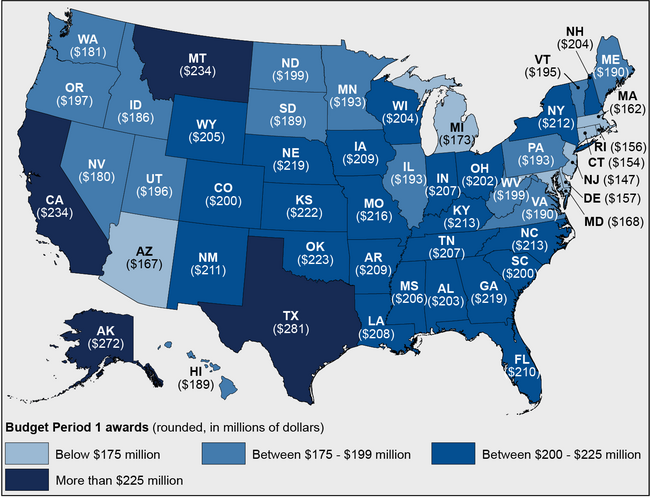
Under the Rural Health Transformation Program (RHTP), CMS awards funds to state governments, which distribute them to organizations in the healthcare industry through subawards (grants that a state issues to the organizations carrying out the RHTP initiatives) and/or contracts. Congress created the program in July 2025 through the Working Families Tax Cut legislation, also known as the One Big Beautiful Bill Act (OBBBA).
Each state works with an assigned CMS Project Officer and Grants Management Specialist under a cooperative agreement, a grant arrangement in which the federal agency stays substantially involved after the award. For states, that means annual continuation applications, regular reporting, and ongoing contact with CMS.
The Five CMS Strategic Goals
CMS built RHTP around five strategic goals that guide how states developed their individual projects:
- Make Rural America Healthy Again: States fund evidence-based work on disease prevention, chronic disease management, behavioral health, and prenatal care.
- Sustainable Access: Rural providers remain long-term access points for care by sharing or coordinating operations, services, and patient transportation, including emergency services, with each other or with regional systems.
- Workforce Development: States recruit and retain rural clinicians and build a broader provider base.
- Innovative Care: CMS encourages new care models and payment approaches that reward providers, including accountable care organizations, for lowering costs and improving quality of care.
- Tech Innovation: States adopt innovative technologies that promote efficient care delivery, data security, and access to digital health tools.
Approved initiatives define what a state’s award funds. A state can change, add, or delete an initiative with CMS approval. CMS has said it will begin considering project changes in later years provided the proposals for change are supported by strong quantitative data.
Transportation and Access-to-Care Initiatives in the Rural Health Transformation Program (RHTP)
Among the RHTP initiatives states fund, transportation matters most where patients must physically reach care, such as new specialty clinic services and referral arrangements between rural hospitals and regional systems. Where public transit is limited, dependable rides built into an initiative give patients who live far from a clinic a route to a specialist or a referral appointment.
An initiative that pairs a new service with steady transportation brings rural patients to the follow-up visits that ongoing treatment depends on, and earlier treatment and fewer avoidable emergency visits can result. By keeping patient volume steady, the same initiative can help a rural clinic or hospital remain a long-term access point for its community, the aim of the Sustainable Access goal.
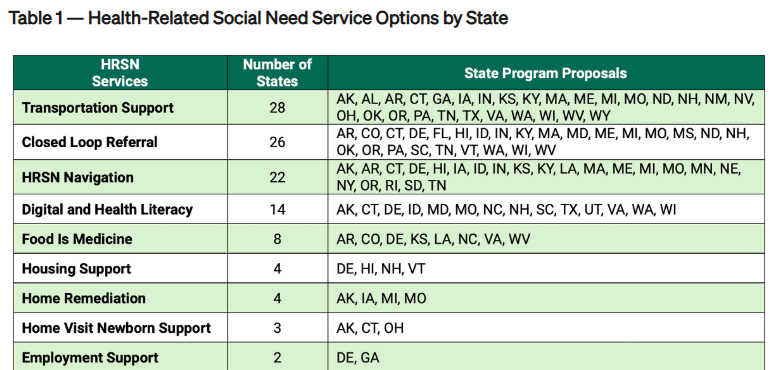
Many states proposed transportation in their RHTP applications. Rice University’s Baker Institute for Public Policy analyzed all 50 applications and found non-emergency transportation support in 28 of them, more than any other health-related social needs service. A state whose approved initiatives expand access to care or add rural healthcare facilities without yet accounting for transportation can add it through the same CMS approval process.
A request to add transportation connects to a measure CMS itself recognizes, since CMS’s Notice of Funding Opportunity (NOFO) for the Rural Health Transformation Program already lists patient travel time to the nearest hospital among its example metrics for measuring access to care, alongside primary care visits and specialist appointment wait times. Tracking completed trips and kept appointments in reporting adds to that measurement and gives the request the strong quantitative data CMS has said it considers. Because rides recur, a funding path for them shows how the change continues after grant funding ends.
Rural Health Transformation Program (RHTP) Deadlines and Compliance Requirements
RHTP funding arrives in five budget periods: Budget Period 1 began Dec. 29, 2025 and runs 10 months (with an end date of Oct. 30, 2026). Each of the subsequent budget periods runs for 12 months, with Budget Period 2 starting on Oct. 31, 2026.
What are the RHTP Funding Obligation and Reporting Deadlines?
States must obligate each year’s RHTP funds during the budget period in which CMS awarded them. Obligating funds means committing them, including to a contract or subaward, and CMS grants no extensions. For first-year funds, that window closes Oct. 30, 2026. Funds committed by then stay with the state, and CMS redistributes any that remain unobligated to other states under federal law.
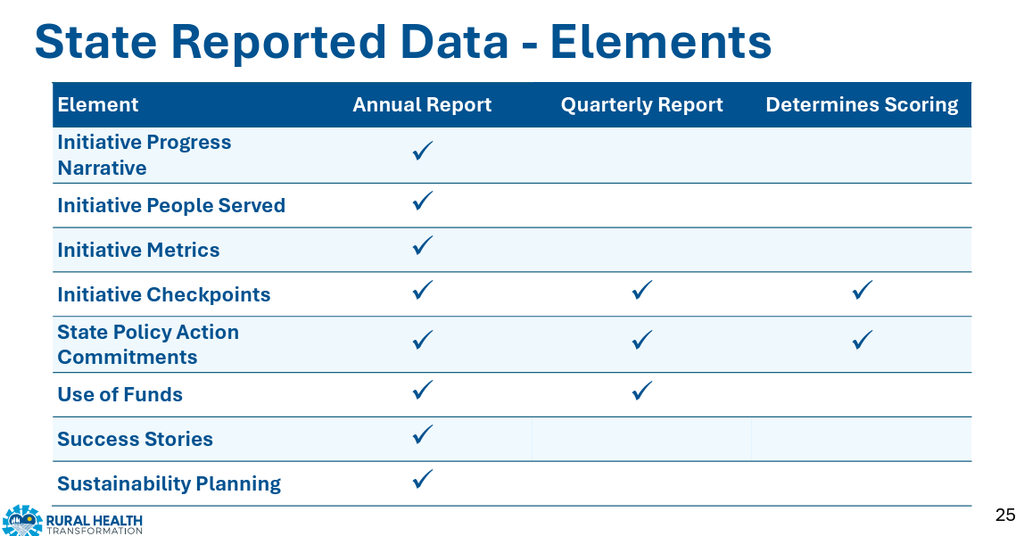
States submit three types of Rural Health Transformation Program report to CMS, each with its own deadline:
- Annual: The first annual report was due Aug. 30, 2026. The next Rural Health Transformation Program annual report is due Aug. 30, 2027
- Quarterly: Each RHTP quarterly report is due roughly 30 days after the period it covers ends.
- Final: The cumulative final report is due Feb. 27, 2031.
CMS is set to announce fiscal year 2027 awards by Oct. 31, 2026, and later years’ awards by the same date each year. Meanwhile, first-year awards can generally be spent through Sept. 30, 2027, the end of the following fiscal year.
State-wide Compliance Requirement for the RHTP Program
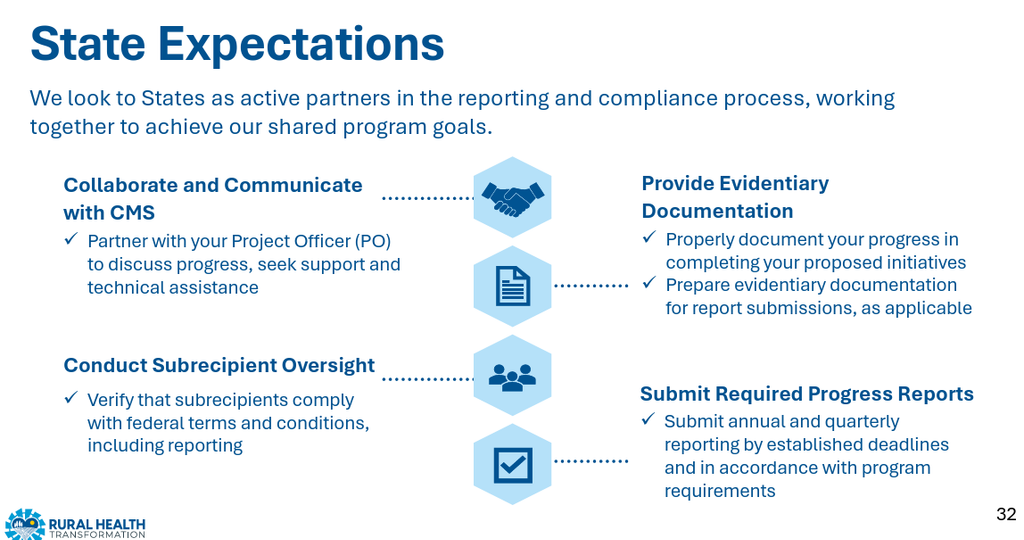
CMS oversees RHTP through regular conversations with states, review of their reports, and planned audits and site visits. If a state falls out of compliance with its notice of award, the document that sets the terms of its grant, CMS can withhold, reduce, or recover a portion of the state’s funding. CMS also plans to allot up to $40 billion over the next four years based on states’ demonstrated progress toward their approved initiatives.
Rural Health Transformation Program (RHTP) Awards and Initiatives by State
Last updated: October 30, 2026
Every state built its own RHTP plan and some examples include strengthening workforce pipelines, developing telehealth networks and food-as-medicine programs, and purchasing mobile health units for rural care. Find your state for an overview on documented priorities.
FAQs:

Ellen Williams is a B2B healthcare marketing leader, known for her ability to help health systems of all sizes drive remarkable ROI through the thoughtful acquisition of technology. Driven by a desire to empower the unsung heroes of healthcare organizations, Ellen champions initiatives that foster efficiency and excellence in patient care, particularly in patient transportation. Prior to Roundtrip, Ellen partnered with health systems across the country in their efforts to revolutionize hiring practices, delivering incredible cost-savings and increased HCAHPS scores.